

By Dr. Shirley J. Caruso, Ed.D.
Abraham Harold Maslow was an American psychologist who is considered the founder of humanistic psychology. Humanistic psychologists emphasize the individual. They take into consideration individual learning styles, values, and self-directedness. They create an atmosphere conductive to learning, identify learner needs and interests, provide warmth and support; emphasize interaction, de-emphasize grading, and provide options and flexibility to match individual learning styles and preferences.
Maslow’s Hierarchy of Needs
Maslow created a model to explain his theory, which he referred to as the Hierarchy of Needs. Maslow’s Hierarchy of Needs is represented by a pyramid depicting the levels of human psychological and physical needs. Figure 1 shows Maslow’s Hierarchy of Needs focusing on an individual.
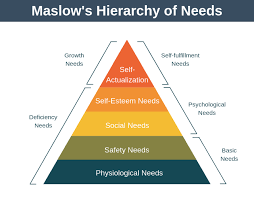
Figure 1
Physiological Needs
Physiological Needs are those required to sustain life, such as food, water, and shelter. If physiological needs are not met, according to Maslow’s theory, the individual’s motivation will occur from the pursuit to satisfy them. The higher needs, such as safety and social, cannot be experienced until the individual has met the needs to sustain life.
Safety Needs
Once physiological needs are met, the individual’s attention shifts to safety in order to be stress-free and free from harm. Such needs might be fulfilled by living in a secure area.
Social Needs
Once an individual has met the physiological and safety needs, social needs become important. Social needs include a sense of belonging, love, and friendship.
Self-Esteem Needs
Once an individual feels a sense of belonging, the need to feel recognized surfaces. Self-esteem needs include respect, recognition, prestige, and confidence.
Self-Actualization
Self-actualization is the high point of Maslow’s Hierarchy of Needs. The need for self-actualization is never entirely satisfied. As an individual grows psychologically, new opportunities for personal growth present themselves. Self-actualization means being all that you can be in each new opportunity.
Organizational Implications for Maslow’s Theory
Maslow’s theory can focus on an individual’s role within an organization as well. Figure 1 shows Maslow’s Hierarchy of Needs focusing on an individual.
Organizations can adopt Maslow’s model to motivate employees through management style, incentive programs, and social events, some examples of which follow:
- Physiological Needs: Provide competitive wages and comfortable working conditions.
- Safety Needs: Provide benefits, job security, safe working conditions, and opportunities for training.
Note: Notice that training appears in each of the levels of Maslow’s model following the satisfaction of physiological needs. Opportunities for training help move employees to each of the higher levels.
- Social Needs: Create a sense of community through group/teamwork, social interaction, and opportunities for training.
- Self-Esteem Needs: Recognize achievements of employees, give them responsibility, offer rewards for accomplishments, and opportunities for training.
Summary
Humanistic psychologists like Abraham Harold Maslow believed that individuals have a strong desire to reach a level of self-actualization. Maslow studied individuals who were mentally healthy rather than individuals who possessed psychological issues. Maslow did this to prove that humans are trying to reach high points in their personal as well as work lives where they are in harmony with themselves and their surroundings.
One Reply to “Maslow’s Theory”