Artificial Intelligence (AI) in Training and Development

Organizations are increasingly integrating AI to personalize learning experiences and enhance training efficiency.

HRDevelopmentInfo.com is your go-to resource for the latest insights, strategies, and tools in the field of Human Resource Development. Whether you're an HR professional, educator, or a leader seeking to enhance your team's potential, our platform offers valuable information to support your growth. We cover a wide range of topics, from professional development and workplace learning to organizational innovation and employee engagement. Our mission is to empower HR professionals with evidence-based knowledge and practical solutions that help create thriving, people-centric organizations. Explore our articles, guides, and resources to stay informed and inspired as you navigate the dynamic world of Human Resource Development. Let's drive growth and success—together!
Organizations are increasingly integrating AI to personalize learning experiences and enhance training efficiency.

By Dr. Shirley J. Caruso, Ed.D. Introduction In the contemporary business environment, diversity and inclusion (D&I) have emerged as pivotal elements for organizational success and sustainability. In her seminal 2013 work, “Taking the Lead: Diversity and Inclusion in the Workplace,” Vernā Myers explores the fundamental importance of fostering a diverse and inclusive workplace. Myers, a […]

This article delves into key principles outlined by these esteemed authors and explores how individuals can enhance their communication skills to navigate challenging conversations and foster meaningful connections.
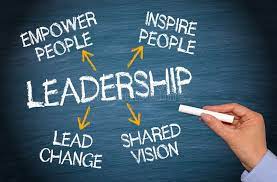
As Kouzes and Posner eloquently stated, "Leadership is not about personality; it’s about behavior—an observable set of skills and abilities." Through intentional development efforts, individuals at all levels can cultivate the behaviors and capabilities needed to lead with courage, integrity, and vision, driving positive change and creating a brighter future for themselves and their organizations.


The goal of instructional design is to promote the cognitive and behavioral processes that lead to learning. In order to successfully achieve this goal, instructional designers must consider learning theories when designing and developing instruction. Understanding the strengths and weakness of each learning theory helps the instructional designer optimize their use in an instructional design strategy that appropriately addresses the needs and learning styles of the learners.

The role of the ID professional is equally important in all organizations. Learning is a continuous process. Rapid changes in technology, demographics, and globalization dictate the need for ID. As new skills are required, organizations depend on instructor-led training programs to develop these skills and put them in practice. Today’s economy may not allow all organizations to have a budget for instructor-led programs. However, it is not impossible to provide just-in-time learning to all staff members at the right time of their careers with consistent quality by developing performance support tools, or job aids, following the same ID process. When learning happens, people enjoy their work, are more productive, increase value to customers, and are happier overall.

Job Aids are essential training tools when individuals join an organization one at a time, and it’s economically impracticable to conduct instructor-led training. With Job Aids, the new-hire can virtually train themselves! Job aids are also handy reference tools, so when the new-hire becomes inundated with new information, Job Aids provide a resource for reference rather than having to go back to their mentor or trainer for support.
It is the Human Resource Development (HRD) professional that can identify a performance gap and determine if training

Organizations today are realizing that instructor-led training may not be enough to meet the demands of rapid changes in demographics, technology, and globalization. According to a report by the Research Institute of America, 33 minutes after completion of a live course, students retain only 58 percent of information covered in instructor-led training courses. Only 33 percent is retained by the second day, and a month later, only 13 percent of the information covered in the course is retained (as cited in Brenner, M., 2008, p. 5).

Job Aids are one of two types of performance support tools, the other being planners. Job Aids benefit organizations in that they are there “just in time” to allow a task or skill to be self-performed. Planners are there when preparing to perform a task and afterwards, when we reflect on our efforts (Rossett & Schafer, 2007, p. 20).