

By Dr. Shirley J. Caruso, Ed.D.
Jean Piaget and Lev Vygotsky Theories of Constructivism
Two cognitive psychologists, Jean Piaget and Lev Vygotsky, developed theories of constructivism that addressed cognitive development and learning among children, adolescents, and adults. While there are similarities between the two theories, there are also differences, and those differences are significant to the understanding and application of the theories in educational settings.
Piaget’s Theory
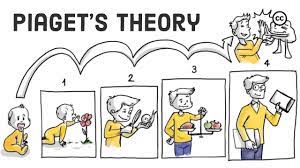 People want their experiences to make sense, and Piaget (1952, 1959, 1980) described this need for understanding as the drive for equilibrium, a cognitive state, also referred to as cognitive constructivism, in which new experiences make sense to us because we’re able to explain them using our existing understanding (Berk, 2010). As long as we’re able to make sense of new experiences, we remain at equilibrium; when we can’t our equilibrium is disrupted, and we’re motivated to reestablish it (Eggen & Kauchak, 2013). Concepts from Piaget’s theory help explain why people want order and certainty in their lives, and how they adapt their thinking in response to new experiences (Eggen & Kauchak, 2013).
According to Piaget, people organize their experience into schemes that help them make sense of their experiences and achieve equilibrium (Eggen & Kauchak, 2013). New experiences are assimilated if they can be explained with existing schemes (Eggen & Kauchak, 2013). Accommodation and a change in thinking are required if new experiences can’t be explained with existing schemes (Eggen & Kauchak, 2013). Maturation and experiences with the physical and social work advance development, and as children develop they progress through stages that describe general patterns of thinking, ranging from perceptual dominance in preoperation thinkers to the ability to think logically and hypothetically for formal operational thinkers (Eggen & Kauchak, 2013).
Piaget proposed that children proceed through four stages based on maturation and experience (Eggen & Kauchak, 2013). Piaget’s theory is guided by assumptions of how learners interact with their environment and how they integrate new knowledge and information into existing knowledge. As an adult educator, I see firsthand examples of Piaget’s theory. Learning in adulthood also involves ongoing discoveries and new awarenesses. Adulthood is a lifelong process of “aha” moments and interaction among learners. In a classroom setting, through collaboration, groups, dyads, and even online discussion boards, a plethora of new “ahas” emerge for the adult learners. Because development in adulthood is primarily social rather than biological (Neugarten, 1964), the classroom experience can be a powerful means to support this process of cognitive and social constructivism.
Vygotsky’s Theory
 Lev Vygotsky’s focused on the role of culture and social interations (Daniels, 2001). Vygotsky maintained that speech is a major psychological tool in the child’s development of thinking. As children age and develop, their basic speech becomes more complex (Daniels, 2001). Vygotsky describes cognitive development as the interaction between social interaction, language, and culture (Eggen & Kauchak, 2013). Social interaction and language provide the mechanism and tools that help children develop understandings that they wouldn’t be able to acquire on their own and advance their development (Eggen & Kauchak, 2013). Social interaction and language are embedded in a cultural context that uses the language of the culture as the mechanism for promoting development (Eggen & Kauchak, 2013). According to Daniels (2001), Vygotksy’s theory is guided by six major assumptions: (1) children develop through informal and formal conversations with adults; (2) the first few years of life are critical for development, as this is where thought and language become increasingly independent; (3) complex mental activities begin as basic social activities; (4) children can perform more difficult tasks with the help of a more advanced individual; (5) tasks that are challenging promote cognitive development growth; and (6) play is important and allows children to stretch themselves cognitively.
Similarities and Differences of the Two Theories
Vygotsky and Piaget have similarities between their two theories of cognitive development. For example, Piaget believed that development occurs because the child is an active learner. In other words, the child must actively organize new information with existing information to obtain a state of equilibrium (Eggen & Kauchak, 2013). Vygotsky agreed with Piaget on this account, theorizing that children are actively involved in the learning and development process because they provide feedback to the adult or teacher about their level of understanding (Eggen & Kauchak, 2013).
Piaget also believed that development declines with age (Eggen & Kauchak, 2013). Vygotsky agreed with Piaget, theorizing that there is a steady increase of development in childhood; then cognitive development declines (Eggen & Kauchak, 2013).
 Piaget proposed that development may be initiated by cognitive conflict. Vygotsky agreed with Piaget, citing that when a child realizes a new idea does not align with his current thinking or prior knowledge, he will seek out the correct answers in order to align his thinking (Eggen & Kauchak, 2013).
There are also several differences in the developmental theories of Piaget and Vygotsky. For example, Vygotsky places more emphasis on culture affecting/shaping cognitive development – this contradicts Piaget’s view of universal stages and content of development as Vygotsky does not refer to stages in the way that Piaget does (McLeod, 2007).
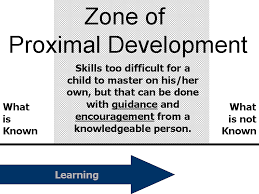
The Vygotsky Theory assumes cognitive development varies across cultures, whereas Piaget states cognitive development is mostly universal across cultures (McLeod, 2007). Vygotsky places considerably more emphasis on social factors contributing to cognitive development (Piaget is criticized for underestimating this) (McLeod, 2007). Vygotsky states cognitive development stems from social interactions from guided learning within the zone of proximal development as children and their partners co-construct knowledge (Eggen & Kauchak, 2013). In contrast, Piaget maintains that cognitive development stems largely from independent explorations in which children construct knowledge of their own (Eggen & Kauchak, 2013). For Vygotsky, the environment in which children grow up will influence how they think and what they think about (McLeod, 2007). In his later work, Vygotsky introduced the concept of the zone of proximal development, often abbreviated as ZPD, which he theorized is the difference between what a learner can do without help and what he or she can do with help.
Vygotsky places more (and different) emphasis on the role of language in cognitive development (again Piaget is criticized for lack of emphasis on this). For Vygotsky, cognitive development results from an internalization of language (McLeod, 2007).
According to Piaget, language depends on thought for its development (i.e. thought comes before language) (Eggen & Kauchak, 2013). For Vygotsky, thought and language are initially separate systems from the beginning of life, merging at around three years of age, producing verbal thought (inner speech) (Eggen & Kauchak, 2013).
The Piagetian Classroom
In a Piagetian classroom, children are encouraged to discover themselves through spontaneous interaction with the environment, rather than the presentation of ready-made knowledge (Fogarty, 1999). Piaget’s theory asserts that children go through all the same developmental stages, however they do so at different rates (Eggen & Kauchak, 2013). Because of this, teachers must make a special effort to arrange classroom activities for individuals and groups of children rather than for the whole class group (Garner, 2008). The educational implication of Piaget’s theory is the adaptation of instruction to the learner’s development level; it is therefore important that the content of instruction needs to be consistent with the developmental level of the learner (Garner, 2008). Similarly, when designing instruction for adult learners in the workplace, the instructional designer first conducts an analysis. A very important part of the analysis process is a learner analysis, and one of the most important pieces of information resulting from a learner analysis is how much (or how little) the learner knows about the training topic. Based on the information gained about the learner’s level of knowledge gained from the learner analysis, the instructional designer begins designing the content at the learner’s knowledge level. If a learner analysis were not conducted, the training is at risk for failure either because the learner was bored with the content because it had been previously learned, or the learner was lost and confused because the level of the content was well above the learner’s prior knowledge.
In a Piagetian classroom, the main role of the teacher is the facilitation of learning by providing various experiences for the students (Berk, 2003). The instructional strategy of discovery learning allows opportunities for students to explore and experiment, while encouraging new understandings (Berk, 2003). Opportunities that allow learners of different cognitive levels to work together often help encourage less mature students to advance to a higher understanding of the material (Berk, 2003). One future implication for the instruction of students is the use of hands on experiences to help students learn (Berk, 2003).
Some general suggestions for Piagetian classrooms include the use of concrete props and visual aids, such as models and/or time lines; facilitation of learning by using familiar examples to explain complex ideas, such as a story problem in math; giving students the opportunities to classify & group information; the use outlines and hierarchies to facilitate assimilation of new information with previously learned knowledge; and the presentation of problems that require logical analytical thinking, such as brain-teasers (Fogarty, 1999).
According to Cushner, McClelland, & Safford (2012), “developmentally appropriate practices result from the process of professionals making decisions about the education and well-being of children based on three important kinds of information or knowledge” (p. 374). The three important kinds of information or knowledge include what is known about child development and learning; what is known about the strengths, interests, and needs of each individual child in the group; and knowledge of the social and cultural contexts in which children live (Cushner et al., 2012). This information and knowledge permit general predictions within an age range about what activities, materials, interactions or experiences will be safe, healthy, interesting, achievable, and also challenging to children (Cushner et al., 2012). They help adults adapt and be responsive to inevitable individual variation, and they ensure that learning experiences are meaningful, relevant, and respectful for participating children and their families (Cushner et al., 2012).
Developmentally appropriate practice is not itself a theory of education or of child development; it reflects a tradition of child pedagogy that gained scientific support in the 20th century largely because of Jean Piaget’s highly influential theory of cognitive development and also reflects the social constructivist theory of Lev Vygotsky (Abu-jaber, Al-shawareb, & Gheith, 2010; Cushner et al., 2012).
In today’s classrooms, teachers need to design lessons that empower students to “make meaning through mindful manipulation of input” (Fogarty, 1999, p. 78). Thus, administrators need to provide teachers with the effective professional development and supplies they need to be effective. By successfully incorporating Piaget’s and Vygotsky’s theories into the classroom, developmental psychology in elementary education, as well as adult education, can positively impact student achievement. “When our students have the cognitive foundation to learn how to learn, they can discover what else is “out there” in our world…” (Garner, 2008, p. 38).
References
Abu-jaber, M., Al-shawareb, A., & Gheith, E. (2010). Kindergarten teachers’ beliefs toward developmentally appropriate practice in Jordan. Early Childhood Education Journal, 38(1), 65-74. doi:http://dx.doi.org/10.1007/s10643-010-0379-z .
Berk, E. L. (2003). Development through the lifespan. Boston: Pearson Education, Inc.
Berk, L. (2010). Infants & children (7th ed.). Boston: Allyn & Bacon/Pearson.
Cushner, K., McClelland, A., & Safford, P. (2012). Human diversity in education: An intercultural approach. (7th ed.). New York, NY: McGraw-Hill.
Daniels, H. (2001). Vygotsky and pedagogy. New York: Routledge Falmer.
Eggen, P. & Kauchak, D. (2013). Educational psychology: Windows on classrooms. (9th ed). Upper Saddle River, NJ: Pearson Education, Inc.
Fogarty, R. (1999). Architects of the intellect. Educational Leadership, 57(3), 76-78.
Garner, B.K. (2008). When students seem stalled: The missing link for too many kids who
don’t “get it?” cognitive structures. Educational Leadership 65(6), 32-38.
McLeod, S. A. (2007). Lev Vygotsky. Retrieved from http://www.simplypsychology.org/vygotsky.html
Neugarten, B. L. (ed.) (1964). Personality in middle and late life. New York: Atherton Press
Piaget, J. (1952). Origins of intelligence in children. New York: International Universities Press.
Piaget, J. (1959). Language and thought of the child (M. Grabain, Trans.). New York: Humanities Press.
Piaget, J. (1980). Adaptation and intelligence. Organic selection and phenocopy (S. Eames, Trans.). Chicago: University of Chicago Press.
When was this article written?