
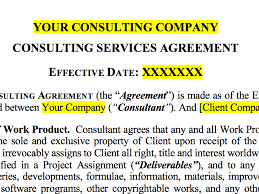
About to help out a company with their next big project?
You’ll want to get your hands on or make your own consulting agreement.
You want to protect yourself and make sure you’ll be properly compensated for your time and energy no matter what happens on the other end, so it’s good to get contractual agreements in writing.
How Do I Know if I Need a Consulting Agreement?
You’ll want to draw up a consulting agreement if you’re hiring a consultant or if you’re going into business with someone as their consultant.
A consulting agreement is basically a type of contractor agreement – it’s just that the specific service you’re contracting out or hiring someone for has to do with consulting.
Consulting as a job can be defined in many different ways, depending on what industry you’re consulting in. They can technically be in any industry, but some common consulting industries are in business, education, healthcare, and IT.
No matter what, consultants need expert-level knowledge and experience in their industry. They should also be good at presenting and communicating with many different kinds of people in various work situations.
Consultants are basically paid to give expert opinions to the companies that hire them. A consultant’s advice can help a business move forward, fix a problem, or get a tricky project done. They give extra and more focused thought to problems that a company doesn’t have the time or energy to think about themselves. Likewise, a consultant could be hired when a company can’t figure out how to fix a problem – a consultant has more expertise and experience in the field and could come up with better solutions.
Part of figuring out if you need a consulting agreement is knowing what kind of worker you are – an employee or an independent consultant (contractor).
If you’re a consulting contractor, you’re either a business or a (usually self-employed) individual that performs some type of job or service on a contractual basis with clients in exchange for money.
Independent consultants are typically brought in to work with an employer for some temporary period of time to help with some problem or advise a company on their next steps.
It’s useful to get an expert’s or an outsider’s view on a situation. Consulting experts are knowledgeable about the industry because of their experience so they can help less experienced companies get through obstacles and plan their next steps based on the probability of certain predictable events a consultant knows to watch for. Outsiders aren’t blinded by groupthink or familiarity because they weren’t involved with the issue or company throughout the whole ordeal.
As contractors, consultants have more flexibility with their scheduling and don’t have to worry about answering definitively to a certain company or authority – they are essentially their own bosses and can always find other clients because they’re competing in the job market. They get more control over their work and work process.
Contractors often have temporary assignments or irregular work, will have to supply (at least the majority of) the necessary equipment, materials, and tools, can’t get unemployment or workers’ compensation payments, and they don’t get any benefits through the job (like matching social security payments, retirement plans, or medical insurance).
If instead you’re a consulting employee, you’re typically on an employer’s payroll getting a steady paycheck from that person or company. Employers will have more of a say over where you do your job, how long you should take, and the overall process of how you get the job done – they get more control over the method of how you do your job and not just over the final results or quality.
Employers also provide benefits – they will cover business operation costs, provide a workspace, necessary resources, and things such as paid vacation days, matching social security, retirement plans, medical, vision, or dental insurance. Note: they’ll also withhold taxes from your paycheck.
Now that we’ve covered what a consultant is and why they would want a consulting agreement in place before working with a client, you might be wondering:
What exactly should be in a consulting agreement anyway?
Anatomy of a Consulting Agreement
There are several topics that are good to cover in your consulting agreement:
Compensation
Your payment is one of the most important things to include in a consulting agreement, as you’d expect. Be sure the contract lists what dollar amount you will be paid for a certain amount of work. Are you paid per project? Will you be paid an hourly or daily wage? Talk it over with your client and put it in writing so you can protect yourself if things go wrong and they try to back out or screw you over.
Since you’re not an employee, you won’t get any special benefits.
Consultant Responsibilities
The agreement should detail the work that’s expected from the consultant. What were you hired to do? What exactly are you going to be helping with? What needs your expertise?
List out all the things you’re going to be responsible for and accomplish by the end of the contract. What services are you providing? What projects will you be helping the team complete?
In the end, there’s usually a line that allows for a little work flexibility if the client wants to ask you for a little more, but not enough extra that the contract has to be renegotiated. It’ll say something like, “and any other services the consultant and client agree upon.”
Ownership
This is a big one for consultants and contractors in general: who owns the intellectual property created in the contractual partnership once the work is done and the contract has ended?
The work created from the contract is considered “work for hire” under U.S. copyright law, which means it belongs to the commissioner or the client who hired the consultant unless the client says otherwise in writing. For example, the consultant may be allowed to own the intellectual property while also giving the company license to use it.
Confidentiality
This is the part of the agreement where the company protects its business and trade secrets.
A non-disclosure agreement (NDA) is about confidentiality. A company might include one to prevent you from spreading company secrets. Your client also might include a non-competition or non-solicitation clause to restrict you from working for the competition or from stealing the company’s clients.
Duration and Termination
Consultant agreements usually only last for a specified amount of time – however long they’re needed or however long it takes to complete the project(s).
There could be a specific deadline mentioned in the contract, or it could go until the consulting service or project is completed. It depends on the nature of the work and what the client and consultant agree upon.
The agreement should also mention what reasons there could be for contract termination, and what happens if the contract is terminated early.
Remember to Save for Taxes!
Taxes can get a little tricky as a consultant because they’re considered an independent contractor.
Since you don’t have an employer withholding money from your paycheck for taxes and benefits and you definitely still have to pay taxes, you have to file extra paperwork to pay up.
Instead of a W-2 from an employer, you’ll get a 1099-MISC from each client you work with that shows how much you earned. You won’t get the form if you made under $600 from that client, but you have to remember to report that number on your taxes in the total.
In addition to the 1099s, you’ll have to fill out a section on your 1040 form called a Schedule C (or C-EZ, the simplified version) – it shows the income you earned from contracting minus expenses. You’ll also have to pay self-employment taxes (Schedule SE of a 1040) for things like Medicare and social security that weren’t already taken out of your paycheck.
Need a Consulting Agreement Template?
We’ve got you covered.
Try one of these templates to build your contract:
Template 1, Template 2, Template 3.
Important note: always make sure you read the actual words of your contract before finalizing it – don’t just fill in the blanks on a template and blindly trust that it’s all going to be okay.
Take the time to see a lawyer to double check that you and your services (or you and your company) are protected during and after the arrangement.
Keyword: consulting agreement