
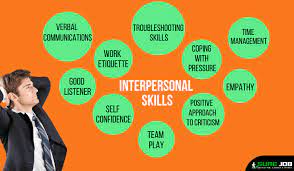
In today’s age, when we are connected more than ever before through technology, communication skills are required in just about any area of life. All of us need to interact with people, and good communication skills allow us to form and maintain lasting relationships. Thankfully, there are methods we can use to improve our interpersonal skills.
For many, improving communication skills leads to greater confidence, transparency and a better quality of life. The following 10 methods we’ve reviewed can be used for an interpersonal skills workshop to help anyone, from the most seasoned public speaker to the shyest individual.
FAQ | Interpersonal Skills
1. How Can Interpersonal Skill Activities Help?
Interpersonal skills are important Research suggests that the way we communicate with others has a large impact on the quality and outcomes of our relationships.
At their most basic level, interpersonal skills help us to be present in relationships, balance priorities and demands, reassess our desires and obligations and improve our sense of self-respect. These skills can then help us achieve our objectives, keep healthy relationships, and maintain our self-esteem, well-being and confidence.
Focusing on games and activities during an interpersonal skills workshop allows group leaders to focus on specific communication skills for their participants, such as learning to better express what they want or need or learning how to say “no”.
2. How Do Interpersonal Skills Activities Work?
Interpersonal skills activities are used in a workshop setting so a group of people, generally coworkers, can focus on specific, measurable goals. Participants may be asked to work in a group, listen closely to instructions, give or receive directions, mediate communication issues and/or conflicts, or read emotions. Not only are the activities effective, but they also can be fun, too.
Workshop leaders must come prepared to lead and bring a focused interpersonal skills activity that can provide a structure to keep the group focused on the task at hand.
3. Where Can You Learn These Activities?
The great thing about the activities we reviewed here is that they don’t cost you a thing. You just need to keep reading, explore the examples we give and then pick the activity or activities you wish to use in your workshop.
4. Why Do We Need to Improve Interpersonal Skills?
You may think that if you can already communicate, then you shouldn’t bother to improve. However you look at it, though, there is always room for improvement. Even the best communicators still need work. Keep working at your craft and the payoff will be substantial.
How We Decided on these Activities
We looked at prominent interpersonal skill activities used by many corporations today to train their employees and then did a thorough review of each one. We looked at what each activity involved, the benefits it offered and what some drawbacks of each one might be.
We narrowed our list of recommended activities down to the 10 best interpersonal skills activities we could identify. Then, at the end of this article, we let you know which activity we think is the best for organizational leaders to implement with their teams.
What We Reviewed
- Mini Golf
- Listening Dilemma
- Skills Assessment Handout
- Sabotage
- The Elephant in the Room List
- Try to Not Listen
- Group Strengths & Weaknesses
- Guess the Emotion
- Repairing Relationships
- Count the Squares
Mini Golf
Features
This activity couples communication with fun. With large, plastic cups, golf clubs (or anything similar), golf balls (or whiffle or tennis balls) and equipment, the group builds a mini golf course with cones, blocks, mats or something similar. This activity works best in a large room or field, in groups of two or four, and where the groups can build their own course.
Each group gets one, large plastic cup to use as a hole for the course. When each group finishes building its course, each member has to explain to the others in the workshop the reason they designed the course the way they did. After each group explains their reasoning, they play their course.
Pros
- Easily explained game with well-known rules
- Requires physical creativity, which may not be used in other types of activities
- Can lead to a wider discussion on teamwork and project planning
Cons
- Requires a substantial amount of space
- Requires materials you may not already have in your office (i.e. clubs, balls, etc.)
- Participants may get lost up in the fun of the activity and lose sight of its greater purpose
Listening Dilemma
Features
This activity is designed to improve listening skills and bring more awareness to the process of listening attentively. The rationale is that any failure to communicate can be traced back to either the listener’s lack of focus or his/her inability to interpret the speaker correctly.
Participants are asked to brainstorm communication issues they can focus on, to pay attention to body language and how others speak, to not think about how they will respond but rather listen to a speaker all the way through.
Pros
- Encourages participants to think about how they listen to others and how they can better communicate messages
- Doesn’t require any additional materials, or large amounts of space
- Open discussion may lead to coworkers addressing real communication issues that have arisen in the office
Cons
- It’s possible that no misinterpretations are experienced during a round
- Some adults may consider the game childish, which may inhibit them
Skills Assessment Handout
Features
Participants are given a workout to assess their own interpersonal communication skills. In essence, it is a self-response questionnaire that gives context to specific and overall communication skills.
Pros
- Allows individuals to think about their own communication without social pressure
- Does not require a group meeting or taking much time out of the work day
- Organizer gets direct insight into how participants perceive themselves
Cons
- Does not include active communication or live feedback
- Participants often rate themselves higher than others would rate them
- Requires the preparation, analysis, and feedback of the test by the organizer
- Does not lead to teamwork in identifying and solving communication problems
Sabotage
Features
Participants in this game must break into groups, brainstorm, discuss and list all the ways they can sabotage a group assignment. Essentially, it can be anything that disrupts a team task. Then, the groups are pulled back together and all ideas are written down on a chalkboard.
Then, the participants are instructed to learn from the sabotage ideas and develop good ideas for successful group work.
Pros
- Requires active teamwork
- Participants use skills useful in the work environment, such as ideation, step-by-step planning and presentation
- It is generally fun for all participants
Cons
- It may be difficult for participants to come up with sabotage ideas
- Younger participants may offer ridiculous examples, undermining the activity
- Great sabotage ideas might reflect negatively on coworker’s motivations
The Elephant in the Room List
Features
This activity is a cross-section between problem-solving, communication and team building. It provides participants with a safe place to have open and honest dialogue, and can help team camaraderie while enhancing interpersonal skills. Better yet, if there are tense relationships within the team, management can use this activity to hash out real issues that often go unaddressed.
The activity begins with a group facilitator, who prepares pieces of paper with elephants on them and passes a set of them to each individual in the group. Each participant must spend a set amount of minutes to write one of their “elephants” and label them according to C-I-A principles: issues they can control, issues they can influence, or issues they have to accept.
These responses are then passed back to the facilitator and announced to the group. The group then discusses whether the elephants in each section should be in the section in which they were placed. The group the addresses the following: Why are we doing this? Why is this happening? What are we doing about it? Who can resolve these issues?
Pros
- Anonymity of the cards allows participants to address real issues they face at work
- An ideally trained facilitator can motivate and lead an honest, meaningful discussion
- May have a direct positive impact on relationships in the workplace
Cons
- Despite the ideal anonymous nature, some participants may not feel comfortable addressing the most important issues for fear of being identified
- Without proper administration, heated and sometimes angry discussion can arise from pointed topics
Try to Not Listen
Features
This activity is meant to be lighthearted, yet capable of addressing serious issues in the office at the same time.
A facilitator divides the group into pairs. Each pair will have one “speaker” and one “listener.” The speaker must speak for X amount of time (two to three minutes) on a topic of their choice. Meanwhile, the listener must act in a way that shows he/she is not listening: the trick is that he/she can only use body language. Then, the partners switch.
Obviously, the focus of this activity is to show participants the importance of body language, and how listening or not listening can affect the confidence of any person who is trying to relay a message. Once the activity is done, participants reflect on their experiences.
Pros
- Humorous at first, then engaging for the participants
- Stresses the importance of body language, an important and oft-ignored aspect of interpersonal skills
- Doesn’t require any additional materials or prep work
Cons
- Some participants may get carried away with their acting role, which can draw attention away from the message
- Some participants may not feel comfortable speaking extemporaneously
- Limits the focus of the discussion primarily to body language
Group Strengths & Weaknesses
Features
This simple activity can prove difficult for some staff members, but it has the potential for genuine reflection and subsequent changes in the way a group of professionals work together.
All this activity requires is that participants are organized into small groups. They then are told to discuss the strengths and weaknesses of each member, and how these might play off of each other and affect the dynamics of the whole tea — for better or worse.
A good moderator will lead the subsequent discussion toward focusing on what makes for a good team member and a good team.
Pros
- Encourages honest reflection and communication with others
- Addressing positive attributes can boost the self-esteem of some participants
- Doesn’t require any additional materials or preparation
Cons
- Some participants may show reticence at the idea of criticizing coworkers, and so may not be entirely truthful
- Occasionally, participants might offer criticism that is too harsh to be appropriate for the desired environment
- Even constructive criticism can lead to defensive behavior and emotional reactions
Guess the Emotion
Features
This simple activity can lead to participants reflecting on an aspect of their communication they might not normally consider: how their nonverbal reactions can be perceived by those they are communicating with.
The moderator should divide the group into two teams, giving each group a set of cards with emotions listed on them. A member from one team will act out said emotion, while the other team tries to guess what emotion it is. Whatever the age, this game is sure to be enjoyed!
Pros
- Moderator can make the game competitive and/or offer some sort of prize, thus stimulating competition
- Allows participants to actually see how they nonverbally communicate with others
- Requires minimal preparation (just the cards)
Cons
- Shy participants may not enjoy the activity and be hesitant to engage
- Limits the topic of the discussion to nonverbal cues
- Limited number of emotions means the activity may be over quickly
Repairing Relationships
Features
While this activity can prove emotional and difficult for some teammates, it has the potential for reflective communication and genuine connection between participants.
In a discussion format, participants are asked to think about problems they perceive in their most important relationships. The moderator should have prepared a worksheet to ask the participants to think about behaviors related to and ways to address these relationship problems.
After some time (several weeks, a month) participants will convene again and be given an additional worksheet which requires them to think about how they’ve enacted the behavioral changes from the first worksheet and what, if any, impacts these changes have had on their relationships. If the participants feel comfortable doing so, then the moderator may lead a discussion on these issues.
Pros
- Requires participants to reflect and act on real issues in their lives regarding work or home life
- The emotional connection to their relationships means participants are likely to follow through with their plans
- Can result in positive benefits for the participants, both in the work environment and at home
Cons
- Some participants may not wish to discuss these issues at work, not even via worksheet
- Requires the preparation and analysis of the worksheets, and relies on all participants making good on their behavioral changes
Count the Squares
Features
For this activity, a PowerPoint must be prepared with an image with several squares, or a series of similar images of squares. Participants are asked to count the number of squares and to write the answer down, without communicating with each other. Then, they will share their answers, which the moderator will remember.
Then, the participants will team up with a coworker and count the squares again, with the process repeated. Finally, the moderator will go through the entire process again, this time with the participants in small groups.
This activity is a springboard to discussing how additional perspective can change how one approaches a subject. An ideal moderator will lead a discussion on group synergy and how it can be promoted in the workplace.
Pros
- Easy to prepare and visually stimulating
- Produces the sensation of competition, which may increase engagement among participants
- Allows for reflection on the dynamics of group interaction
Cons
- Some individuals may count the correct number of squares the first time, undermining the activity
- Participants may have difficulty drawing the link between the image of squares and the discussion that follows
- Requires space and material for a PowerPoint presentation that can be easily viewed by the entire team
The Verdict
Ultimately, you are the one who best knows the people with whom you work. You know their strengths, their weaknesses and what activity is likely to appeal to them.
Different interpersonal skills can be practiced with different activities. If your team consists of mostly shy, reflective people, then we think you are best keeping them comfortably engaged by trying Repairing Relationships or the Skills List Handout.
If you know real interpersonal problems exist within your team currently, then we recommend you try the Elephant in the Room or Strengths and Weaknesses, in an attempt to address and resolve these issues.
Or, if you simply want a fun activity to get your workers to thinking about how they communicate, then we think you can’t go wrong with Count the Squares or Mini Golf.
No one activity is a magic wand that will automatically make your participants perfect communicators. But with the right amount of thought and preparation, and with the skills of a good leader acting as a moderator, any of these activities might lead to real reflection on behalf of the participants, and subsequent improvement in the interpersonal skills of the entire team.